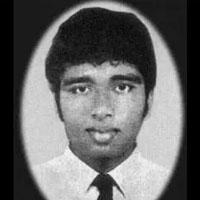
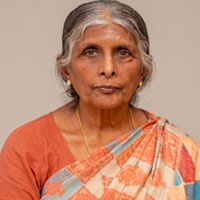
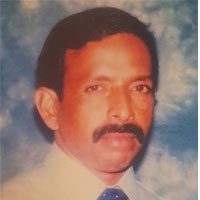
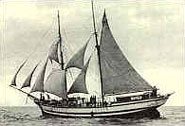
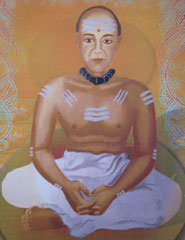
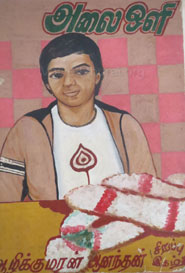
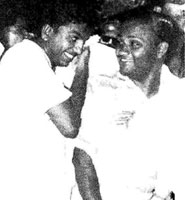
Today marks the 52nd death anniversary of Pon Sivakumaran, who is remembered as the first martyr who sacrificed his life for the liberation of the Tamils.
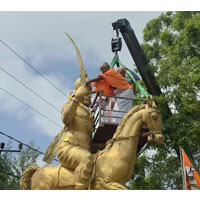
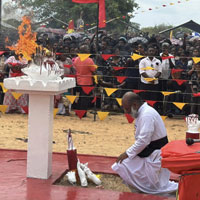
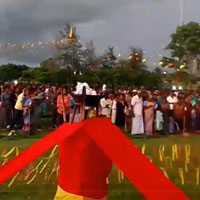
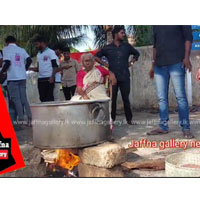
A remembrance event is scheduled to be held today at 8:00 a.m. at the public market premises near the Urumpirai junction, where his memorial statue is located.
A former student of Jaffna Hindu College, Pon Sivakumaran is regarded as one of the pioneers of the Eelam Tamil liberation struggle.
History
Thiyagi Pon Sivakumaran (Ponnuthurai Sivakumaran) was a foundational pioneer in the Eelam Tamil liberation struggle. He is widely regarded as the first Tamil militant to die in the modern armed conflict and the historic initiator of the "cyanide culture," choosing death over capture to protect his movement's secrets.
Early Life and Political Awakening
Birth: August 26, 1950 (some sources note September 26).
Hometown: Urumpirai, Jaffna.
Background: He was the son of Ponnuthurai, the respected principal of Urumpirai Hindu Tamil Vidyasalai, and Annalakshmi. His parents were staunch supporters of S. J. V. Chelvanayakam and the Ilankai Tamil Arasu Kachchi (ITAK), which deeply shaped Sivakumaran’s political consciousness from an early age.
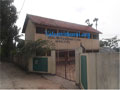
Education: He attended Urumpirai Hindu College and Jaffna Hindu College.
Standardisation and the Tamil Student Federation (TSF)
In the early 1970s, the Sirimavo Bandaranaike government introduced the highly controversial "Education Standardisation Policy", which artificially raised the university admission requirements for Tamil-speaking students compared to their Sinhalese peers.
Enraged by this systemic discrimination, Sivakumaran joined the Tamil Manavar Peravai (Tamil Student Federation - TSF), founded by Ponnuthurai Sathiyaseelan.
Driven by a desire for more immediate, radical resistance, he later broke away to lead an independent underground youth network often referred to as the Sivakumaran Group.
Early Armed Defiance
Long before major militant groups were fully established, Sivakumaran engaged in symbolic and targeted sabotage against the state framework:
September 1970: He attempted to assassinate the Deputy Minister of Cultural Affairs, Somaweera Chandrasiri, by planting a time bomb under his vehicle during a visit to Urumpirai Hindu College. The vehicle was empty, and no one was harmed.
February 1971: He threw a hand grenade at the car of Jaffna Mayor Alfred Duraiappah, an ally of the ruling government. Duraiappah was not in the vehicle at the time, but the incident triggered an intense police manhunt for Sivakumaran.
The 1974 Tragedy and Supreme Sacrifice
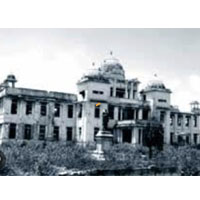
The turning point came in January 1974 during the Fourth International Conference of Tamil Research in Jaffna. Deeply resented by the state, the event was said to be brutally disrupted by Sri Lankan security forces, resulting in the deaths of nine Tamil civilians. This event deeply traumatized and radicalized the youth of Jaffna, including Sivakumaran.
The Cornering
On June 5, Sri Lankan security forces surrounded and cornered him. Having previously endured brutal torture during a prior police detention, Sivakumaran was resolved never to let the state break him again or force him to compromise his comrades.
The Cyanide Vial
At just 23 years old, he swallowed a vial of cyanide he carried on his person, dying instantly.
Historical Impact: Sivakumaran became the first modern Tamil political figure to adopt cyanide as a defensive measure. Velupillai Prabhakaran, the later leader of the Liberation Tigers of Tamil Eelam (LTTE), explicitly cited Sivakumaran’s ultimate sacrifice as the direct inspiration for making the cyanide capsule standard issue for his cadres to protect operational secrecy.
News & Commemorations
Tamil Students' Day of Uprising: June 5th is observed annually as "Tamil Student Uprising Day" or "Sivakumaran Day" across the North-East of Sri Lanka and throughout the global Tamil diaspora.
Social Breakthrough:
His massive funeral procession from Jaffna Hospital to Urumpirai shattered long-standing conservative social norms of the era, notably when local Tamil women defied tradition by marching all the way to the cemetery to pay their respects.
Memorial Statue:
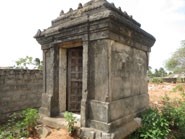
A bronze statue erected in his honor at Urumpirai became a frequent flashpoint; it was destroyed by security forces during the 1977 anti-Tamil pogroms, demolished again during military operations in the 1990s, and successfully reconstructed in 1999.
(Disclamier - The information above has been compiled from public news reports and social media updates)
Comments will be edited (grammar, spelling and slang) and authorized at the discretion of Valvettithurai.org. The website also has the right not to publish selected comments.
Reproduction of our any news item is allowed when used without any alterations to the contents and the source, Valvettithurai.org, is mentioned.